Teen Challenges in Job Market
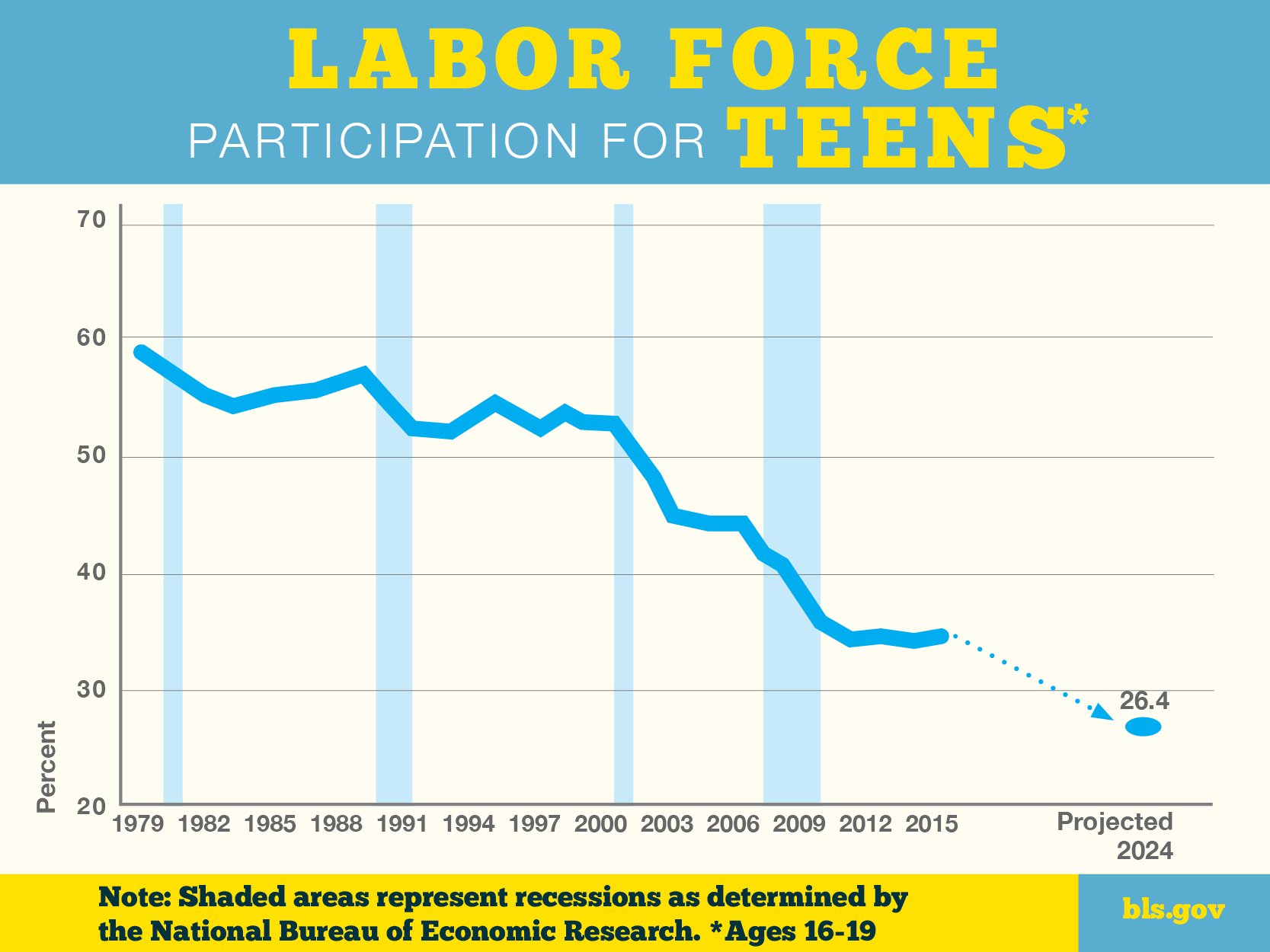
In 2025, the U.S. youth job market is facing significant challenges. Young people aged 16 to 24 are finding it increasingly difficult to secure employment compared to previous generations. Several economic, technological, and social factors have contributed to a historically weak youth job market.
One significant indicator of the low youth job market is the decline in youth labor force participation. According to the U.S. Bureau of Labor Statistics (BLS), the labor force participation rate for teenagers aged 16–19 has remained near 36% in 2024 and early 2025, far below the rates seen in the late 1990s, when over 50% of teenagers were working or actively seeking work. Fewer young people can find or even attempt to find employment.
Youth unemployment rates also remain higher than the national average. In early 2025, the unemployment rate for workers aged 16–24 hovered around 8–9%, compared to a national overall unemployment rate of approximately 4%. This gap highlights how younger workers are more vulnerable during periods of economic uncertainty. Employers often prefer experienced workers during slowdowns, making it harder for youth to compete.
Another factor weakening the youth job market is automation and artificial intelligence. Entry-level jobs traditionally filled by young workers—such as cashier, fast-food, retail, and fundamental administrative roles—are increasingly being replaced by self-checkout systems, AI scheduling software, and automated customer service. A 2024 McKinsey report estimated that up to 30% of entry-level service tasks could be automated by 2030, a trend already reducing hiring opportunities for young workers in 2025.
Education and experience requirements have also risen. Many employers now expect previous work experience, certifications, or advanced digital skills even for entry-level positions. This creates a cycle where young people cannot get jobs without experience and cannot gain experience without jobs. As a result, internships and unpaid or low-paid positions have replaced many traditional youth jobs, limiting access for students from lower-income families.
Seasonal and part-time employment opportunities have also declined. Industries that once hired large numbers of teens, such as retail and hospitality, have reduced staff due to online shopping, labor shortages, and increased operating costs. The National Retail Federation reported in 2024 that retail employment levels had not fully recovered to pre-pandemic highs, directly impacting youth employment opportunities in 2025.
The youth job market in 2025 is at a historically low level due to reduced labor force participation, higher unemployment rates, automation, increased job requirements, and shrinking entry-level opportunities. Data from the Bureau of Labor Statistics and economic research organizations clearly show that young workers face more barriers than previous generations. Addressing these challenges will require expanded job-training programs, paid internships, and policies that support youth employment.