Water Bankruptcy
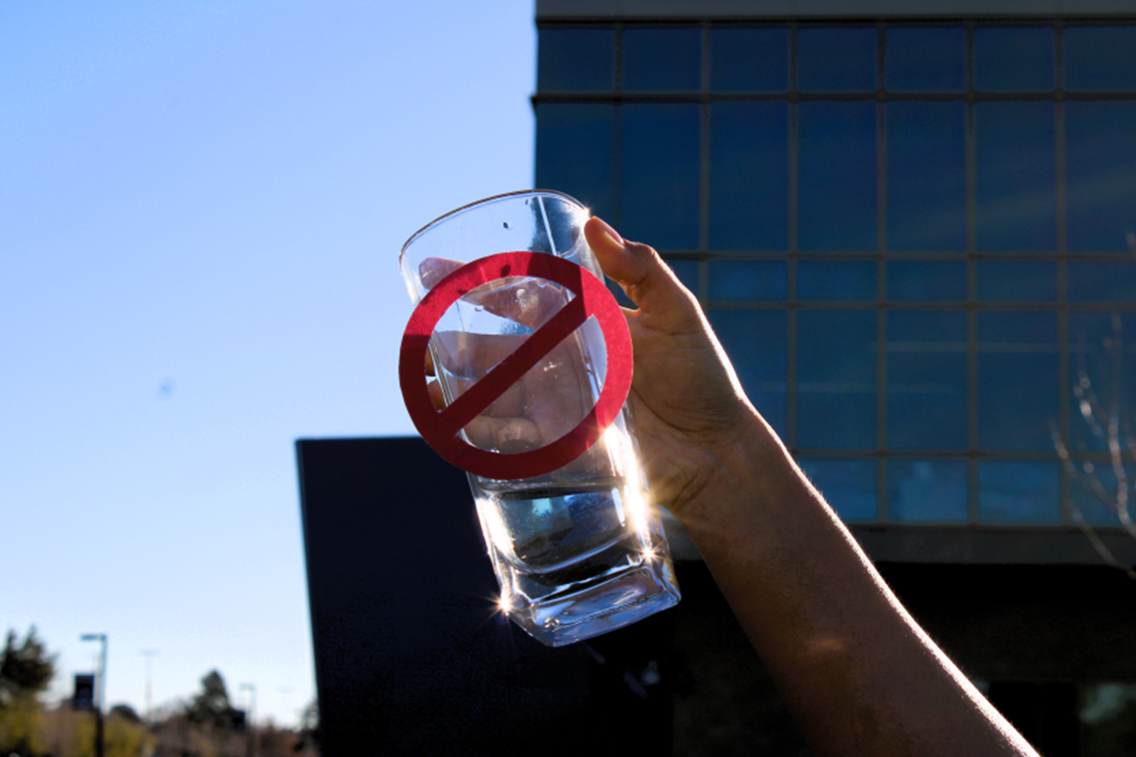
When water becomes a commodity, who decides who drinks? Or who goes thirsty? For the first time in human history, humanity has thrown off the global water cycle, impacting economies, food production, and lives, according to a landmark new report. Decades of misusing water and human-caused climate change have collided, causing "unprecedented stress” on the global water cycle.
3 billion people have already been affected by the disruptions in the water cycle. Cities are sinking because the groundwater is drying up. Crops aren't getting enough nutrients because there is no water. With no immediate action, this crisis affects 50% of the global food production and risks reducing 8% off a country’s GDP (Gross Domestic Product) by 2050 and 15% for lower-income countries.
Not only does this affect food production and sanitation, but it also affects the environment. This is beyond humanity now. Our rivers no longer reach the sea, glaciers are shrinking or disappearing, aquifers are plumping down, forests are drying out and burning, and deserts and dust storms are expanding. “These are not simply signs of stress or episodes of crisis. They are symptoms of systems that have overspent their hydrological budget and eroded the natural capital that once made recovery possible, with knock-on effects for food prices, employment, migration, and geopolitical stability,” according to the United Nations University, Institute of Water, Environment, and Health.
In recent years, the terms “water stress” and “water crisis” have been used to imply that the system can return once stress is alleviated or the crisis is managed. However, long-term over-extraction of water, climate change, etc, have all damaged the ability to recover. ”…“stress” and “crisis” no longer capture the reality in which the damage is systemic, not temporary. Using these terms isn’t even an option anymore when the baseline for them doesn’t even exist. There is no way to recover from the destruction that has been done. This new reality is defined as “Water Bankruptcy". This is our sign to do something before the worst really does happen.
For more information, visit United Nations University Institute for Water, Environment and Health: GLOBAL WATER BANKRUPTCY United Nations University Institute for Water, Environment and Health Living Beyond Our Hydrological Means in the Post-Crisis Era.