The Classroom Without Walls: What I Learned in Guatemala and Belize
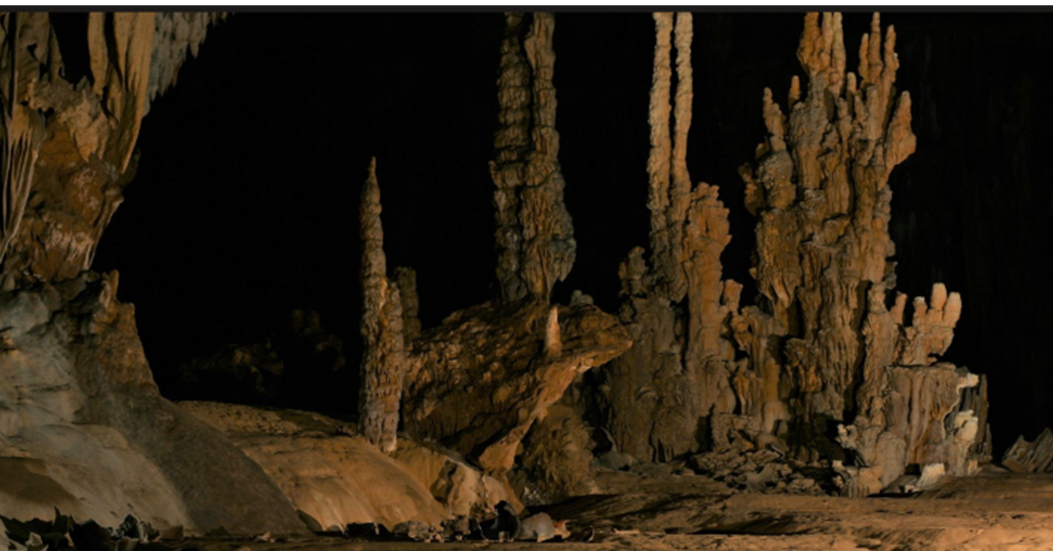
Hiking through a river in a cave that the ancient Maya walked through more than 1,000 years before me is an experience I never thought I would have. We were led by archaeologist Dr. Rafael Guerra through a pitch-black cave, navigating through water that was sometimes at our ankles and sometimes deep enough to require swimming. We scrambled over boulders and carefully squeezed around sparkling limestone stalagmites. The pathway we followed had been used by the Maya between 300 and 1,000 AD, eventually leading us into an open cavern filled with ceremonial offerings to their gods, particularly the rain god, who was especially important during times of intense drought. We saw ceramics once used to carry incense and food offerings, as well as other artifacts left behind during significant rituals like bloodletting ceremonies. We also saw a fully preserved, calcified human skeleton. Dr. Rafael provided a thoughtful and informative tour, explaining both the cave’s geological formation and the cultural and spiritual significance it held for the Maya people.
I remember reading about the Maya civilization in a textbook during middle school and imagining what their cities and temples might have looked like. This year, I was fortunate enough to visit four different Mayan archaeological sites (other than the cave) in Belize and Guatemala, learning from expert guides while experiencing the power and complexity of the Maya firsthand.
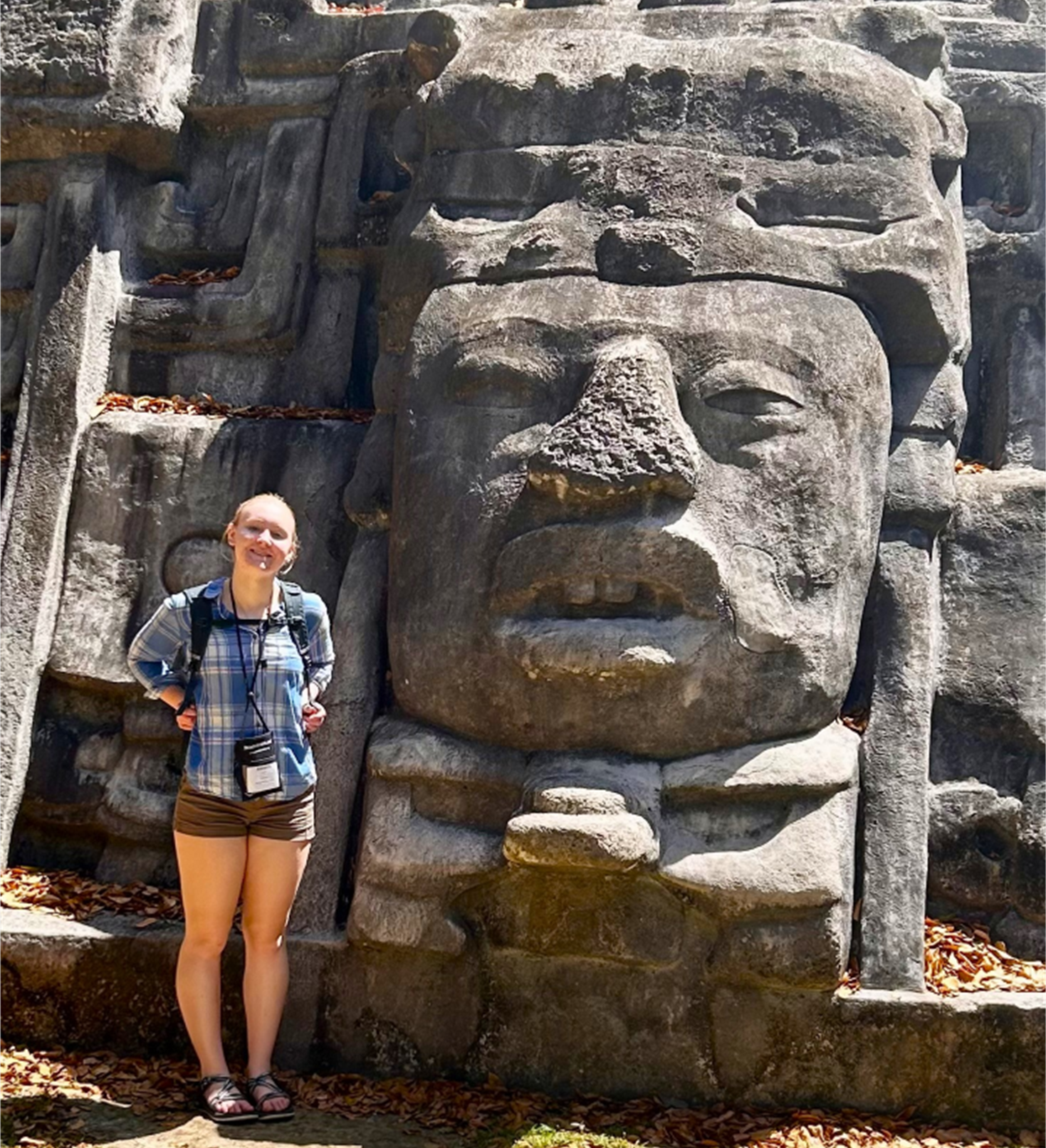
Our first stop was Lamanai, where I saw my first Mayan pyramid. I learned how the temples were constructed and how the civilization thrived for nearly 3,000 years. The second site was Tayasal, where local Guatemalan college students were actively working on excavation projects. Seeing the process firsthand helped me understand how much time and precision it takes to uncover structures hidden for centuries beneath layers of soil and vegetation. Many of the buildings initially appeared as large, unnatural hills covered in trees and plants, still waiting to be uncovered.
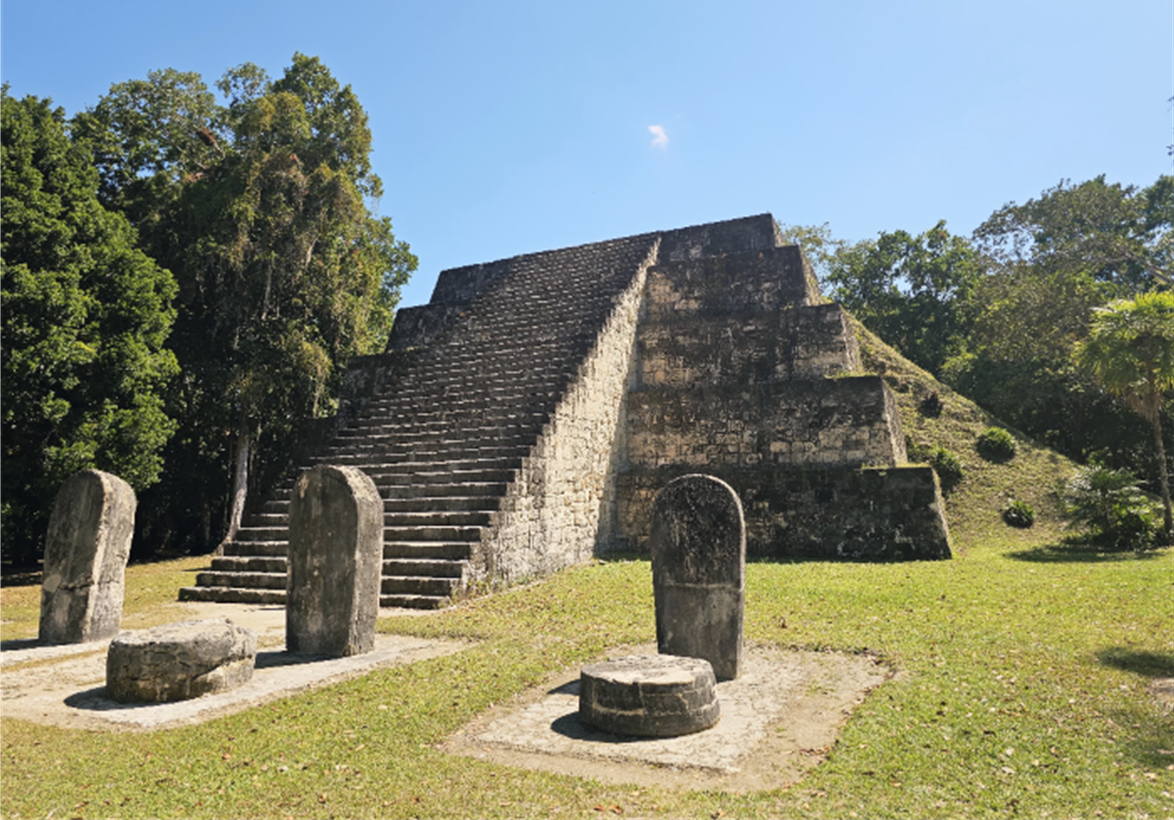
We then spent a day in Tikal, one of the most well-known Mayan archaeological sites. Tikal is famous for its towering temples and expansive civilization. From the top of the temples, we looked out across miles of rainforest and learned about Mayan culture, religion, and the remarkable longevity of their society. At its peak, Tikal had a population of around 30,000 people and remained active for approximately 1,500 years. The scale and organization of the city demonstrated the Maya’s advanced understanding of architecture, agriculture, and community structure.
Our final stop was Cahal Pech, a smaller, more intimate site that offered insight into daily Mayan life. Here we learned about the Maya ball game (a religious game, not a sport), explored residential areas, and saw marketplaces, helping us better understand how people lived, worked, and interacted with one another.
We were incredibly fortunate to learn from local guides, many of whom are descendants of the Maya people. Their personal connections to the culture gave us deeper insight into traditions that are still meaningful today. I learned about the significance of the Ceiba tree, which symbolizes the connection between the underworld (its roots), the human world (its trunk), and the gods (its branches). I also learned about the importance of astronomy in Mayan culture while standing atop an ancient observatory, gaining a new appreciation for how closely science, religion, and daily life were intertwined.
One of the most meaningful conversations I had was with our guide Noel, who shared that his grandparents still practice Mayan traditions in their mountain community in Guatemala. The Mayan culture is not only a part of the past; it is still practiced today and is struggling to be passed down. Many people of Mayan descent still visit archaeological sites to make offerings and maintain connections to their spiritual roots. But the language and traditions of the Mayan are becoming less practiced.
Although I missed two weeks of school, I did not miss learning. Experiencing Mayan history, culture, and scientific knowledge firsthand helped me better understand ideas I had previously encountered only in textbooks. Standing in places shaped by thousands of years of human curiosity, resilience, and belief reminded me that education does not only happen in a classroom. Sometimes, the most impactful lessons come from stepping outside of it.